by Hazel Anna Rogers for the Carl Kruse Blog
My friend was sick last week, so I sewed him a handkerchief while I watched Summer with Monika by Ingmar Bergman. I sewed the border with midnight blue thread, then I wonkily embroidered his name and some small flowers in one corner of the white square.
Summer with Monika (Sommaren med Monika, 1953) is the story of two young lovers, Harry and Monika, who meet in Stockholm one afternoon while on a lunch break from their respective arduous jobs. Harry works as a delivery boy, and Monika as a grocery packer. When Harry’s father ends up in hospital as a result of stomach issues, Harry and Monika take to the sea in Harry’s father’s boat, with the hope of an idyllic endless summer ahead.
While away, Monika becomes pregnant, and, upon their return, Harry decides to begin studying as an engineering apprentice while Monika reluctantly stays home with their child. The film ends with Harry’s discovery of Monika cheating on him with the man who formally bullied him, and the two separate, leaving Harry with the baby, and Monika free to pursue the hedonistic life she refuses to leave behind.
I want summer to go on just like this…
It’s a bittersweet story. Bergman’s films often are. Deceptively simple films that cut right into the meat of it: summer nostalgia tinged with the salty burn of adulthood advancing over the horizon; crazy love, mad love, There’s no one but you. Only you, the kind of love that wraps you up and spins you round till you’re dizzy with it; and the slow shaving down of hope by the angle-grinder of life.
I have seen a few of Bergman’s films now. The Seventh Seal, Persona, Through a Glass Darkly, Wild Strawberries, The Silence. There are many more beyond these. Bergman’s films are made of magic, they’re carved right out of memories I keep beneath my pillow. Is it like that for you? These old films, old but unchanging, life hasn’t changed, except for things like digital cameras and tumble dryers, but the real stuff hasn’t changed, family and lovers and swimming naked in the cold sea.
He spends so much time with them, Bergman does. This is what is good. A scene stays still. We watch it play out. We are seated on a rock, watching Monika and Harry shelter from the wind. We listen to them talk about their dreams.
Harry Lund: Monika, I’m going to start night school. You can become an engineer if you keep at it. I’ve always liked engines. I fixed the engine on the boat last autumn.
Monika Eriksson: You study to be an engineer, and then we’ll get married, okay? Harry. I think I’m pregnant.
Harry Lund: What? Seriously?
Monika Eriksson: Hmm.
Harry Lund: We have to go back so I can start working. You need proper food.
Monika Eriksson: No, I’m not going back. I want summer to go on just like this. Harry, I don’t know anyone as sweet as you.
Harry Lund: Monika, we have to make something real out of our lives. We’ll care for each other. I’ll study and get a decent job, so we can get married and have a nice house, you and me and the little one on its way.
Monika Eriksson: You’ll come home from work and I’ll have dinner ready. We’ll take the children for Sunday walks. I won’t work. I’ll stay at home with the kids. We’ll have nice clothes.
Harry Lund: We’ll have a good life. We’ll always stay together.
Monika Eriksson: Just you and me.
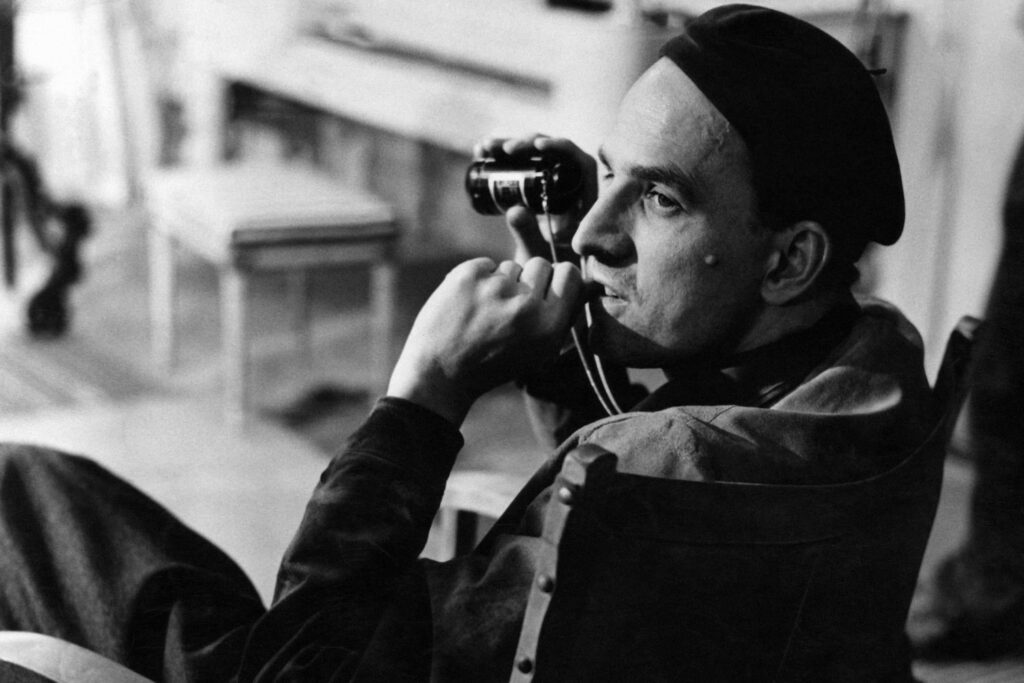
And the camera doesn’t blink, doesn’t move away to meet them from somewhere else, it is content to watch peacefully from the sidelines. I think this is what is so good. Here, in this 21st Century, we are used to getting perspectives from every direction; from the shoulder of one person to the shoulder of the other, then from the other side of the room, then from outside the window, then from the tabletop…the camera is skittish, disinterested, its attention span lasts mere seconds before it must move on to something better. A heartbreaking scene is ripped apart by this restless camera. We miss the change of expression on her face, the twitch of the nose, the touching of the ear – all these things are lost when the camera assumes that its audience is as bored as itself.
Bergman’s films are brilliant. Perfect presents wrapped in bows made of sharp minimal dialogue, unbroken silences, wide landscapes, captivating actors. But it is this stillness, the patience of the director, that makes them great. It is a quality I see in modern directors such as Hlynur Pálmason, Paul Thomas Anderson, and Joachim Trier, and, of course, in many that are long gone: Andrei Tarkovsky, Stanley Kubrick, Orson Welles. In this time of click-type-scroll-text-photo-video-advert-shop – in this time, with attention spans little different from the goldfish we so long mocked – in this time, more than ever, let the long take return to the movie screen.
=========
The Carl Kruse Blog homepage is at https://www.carlkruse.com
Contact: carl AT carlkruse DOT com
Other articles by Hazel for the blog include Shockumentaries, Death of the Fantasy Film, and A Year in Books.
Find Carl Kruse on one of his older blogs here.